
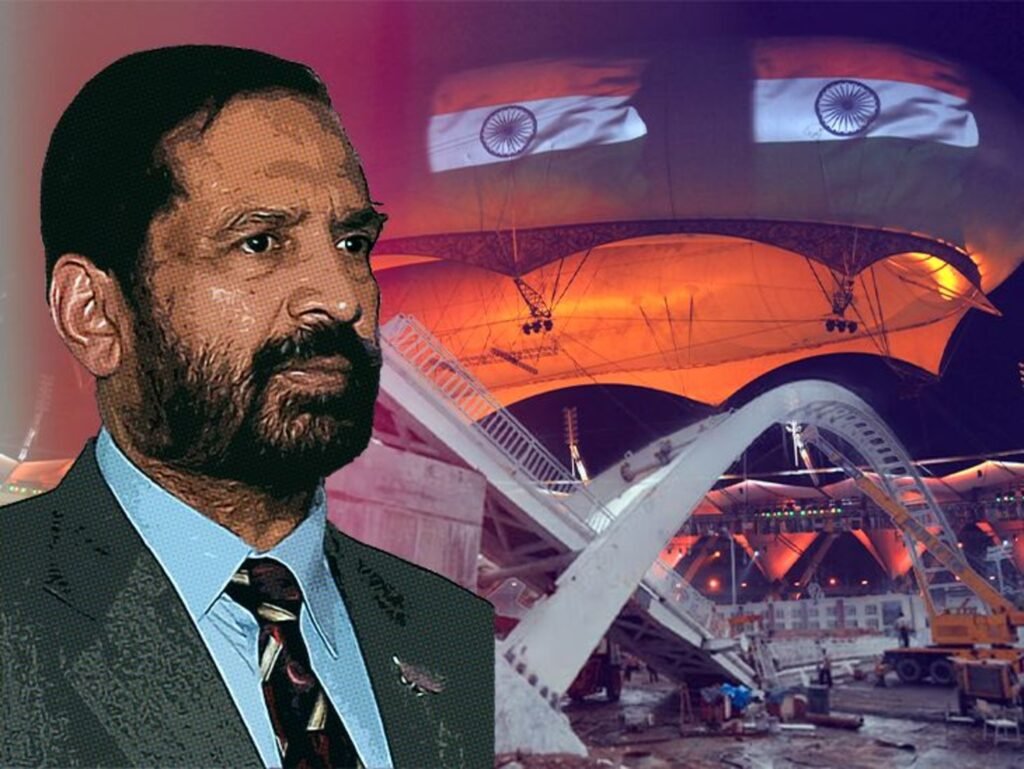
The 2010 Commonwealth Games were intended to showcase India’s growing global stature. Instead, the event became one of the country’s most prominent public spending and governance controversies, with allegations of inflated costs, procurement irregularities and delays.
The Games were held in Delhi from 3 to 14 October 2010, bringing together 4,336 athletes and 2,115 officials from 71 Commonwealth Games Associations. India finished second in the medal tally with 38 gold, 27 silver and 36 bronze medals.
Costs Rise Sharply
The financial scale of the Games expanded dramatically. The original May 2003 bid estimated expenditure at about ₹1,200 crore. By October 2010, the CAG recorded an overall budget estimate of ₹18,532.31 crore for the Games project, excluding investments by agencies such as Delhi Metro Rail Corporation and the airport authorities.
Separately, the then Urban Development Minister S. Jaipal Reddy told Parliament in August 2010 that ₹28,054 crore had been spent on projects associated with the Games, including substantial expenditure on Delhi’s infrastructure. The figure often cited as ₹30,000 crore therefore represents a broader estimate of Games-related spending rather than the CAG’s final Games-project budget.
Procurement Under Scrutiny
The CAG audit highlighted serious weaknesses in procurement and financial management. Its report documented unusually high rates for several items procured by the Organising Committee. For example, the audit records a ₹9,379 rate for a soap dispenser in one procurement schedule.
The controversy extended beyond individual items. The CAG found that delays and weaknesses in planning and monitoring contributed to a sharp escalation in costs. The Delhi government’s audit also described the initial budget as highly conservative and unrealistic and noted that delays resulted in activities being concentrated toward the end, increasing costs.
Multiple Agencies, Weak Coordination
The Games involved several government bodies and agencies, including the Organising Committee, Delhi government, DDA and CPWD. The complex structure, delayed decisions and fragmented responsibilities created significant challenges in monitoring expenditure and implementation.
The CAG’s findings ultimately raised a larger question: how effectively was such a massive public project planned, monitored and audited?
Investigations Follow
The controversy triggered investigations by agencies including the CBI and Enforcement Directorate. The government removed Organising Committee chairman Suresh Kalmadi and secretary general Lalit Bhanot from their positions in January 2011, citing the ongoing CBI investigation into alleged corruption and irregularities.
Kalmadi and Bhanot were subsequently arrested in connection with procurement-related cases. However, allegations and arrests should not be treated as convictions; several legal proceedings continued for years. In 2025, a Delhi court accepted the Enforcement Directorate’s closure report in the money-laundering investigation linked to the Games.
A Mixed Legacy
The Commonwealth Games left behind a complicated legacy. On one hand, the event was accompanied by major investments in venues and city infrastructure. On the other, the CAG’s findings exposed weaknesses in planning, procurement, financial management and oversight.
The biggest lesson from the CWG controversy was therefore not simply how much India spent, but how public money was planned, approved, procured and monitored. The episode remains a case study in how delays, weak coordination and inadequate oversight can dramatically increase the cost and risks of a mega public project.
The Commonwealth Games showcased India’s sporting ambition but its controversies became a lasting reminder that big projects require equally strong governance.