
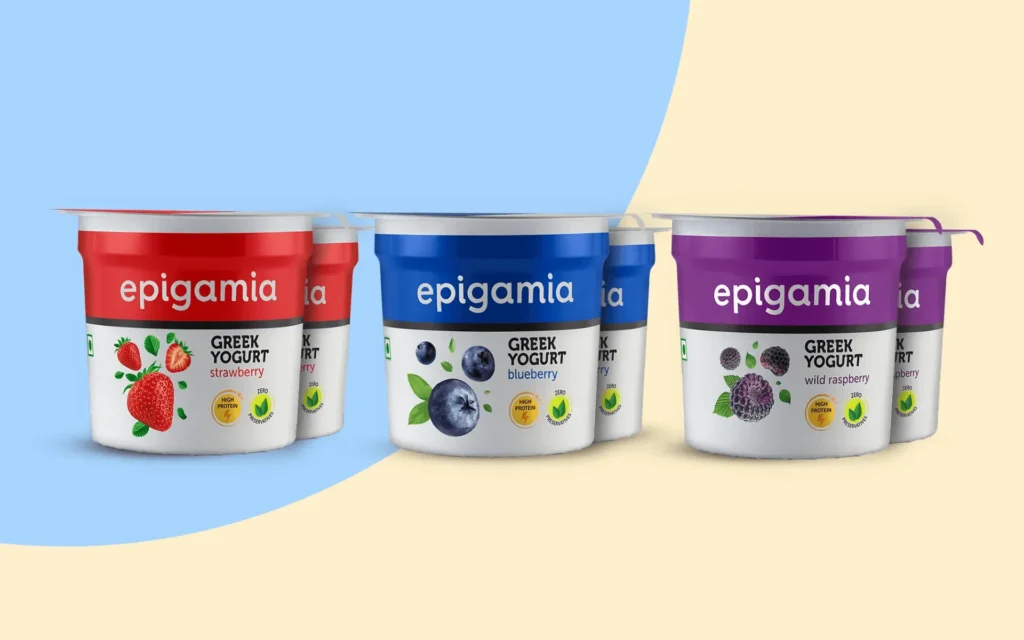
Not every successful startup begins with a complicated piece of technology. Sometimes, it starts with a simple question about everyday life: why can’t convenient food also be healthy?
For Rohan Mirchandani, that question became the foundation for Epigamia, a modern food brand that helped bring Greek yogurt and other health-focused products into India’s growing packaged-food market.
From Corporate Life to Entrepreneurship
Before becoming an entrepreneur, Mirchandani studied at New York University and worked in the United States. His early career gave him exposure to business and consumer markets, but he eventually decided to return to India.
Back home, he began exploring opportunities in the food and beverage industry. Together with partners, he became involved in building businesses that focused on changing consumer preferences.
The experience helped him understand an important shift: Indian consumers, particularly younger urban customers, were becoming more interested in convenient products that also fit healthier lifestyles.
Spotting an Opportunity
The Indian dairy market was already large, but many categories that were popular in international markets remained relatively niche in India.
Greek yogurt was one such category.
Mirchandani and his team saw an opportunity to introduce a product that could combine convenience, nutrition, and modern branding.
In 2015, Epigamia was launched with Greek yogurt as one of its key products.
Rather than competing only on price, the brand focused on product quality, packaging, flavors, and positioning.
Making Yogurt More Appealing
One challenge was changing consumer perception.
Traditional dairy products were already deeply established in Indian households. Introducing a new style of yogurt meant explaining why consumers should try it.
Epigamia experimented with different flavors and formats to make the category more approachable.
The company also positioned the product toward consumers looking for protein-rich and convenient food options.
This approach helped the brand move beyond the image of yogurt as simply a traditional dairy product.
Building a Modern Food Brand
Creating a packaged-food company requires a very different approach from building a software startup.
Products must be manufactured consistently, transported under appropriate conditions, placed in stores, and delivered to consumers before their shelf life expires.
Epigamia therefore had to build relationships across manufacturing, distribution, retail, and marketing.
The founders also had to compete for limited shelf space alongside established food companies.
Expanding the Product Portfolio
As the brand developed, Epigamia expanded beyond its original Greek yogurt offerings.
The company introduced products across categories such as smoothies, flavored yogurt, and other dairy-based foods.
The broader strategy was to build a health-focused food brand rather than depend entirely on a single product.
Expansion also allowed the company to reach consumers with different tastes and purchasing habits.
Learning From the Market
Mirchandani’s entrepreneurial journey demonstrates the importance of understanding local consumers.
A product that succeeds internationally cannot simply be copied into another market. Pricing, flavors, packaging, distribution, and consumer habits can all be different.
Epigamia’s development involved adapting the concept of Greek yogurt to Indian preferences and building a brand around those differences.
The Challenges of Food Entrepreneurship
Food businesses face pressures that many digital startups do not encounter.
Raw-material costs can change, products have limited shelf lives, and distribution requires careful planning. At the same time, consumer preferences can shift quickly.
Building a successful food brand therefore requires a combination of creativity and operational discipline.
For Mirchandani, entrepreneurship meant balancing the excitement of creating a new consumer category with the practical realities of manufacturing and distribution.
Lessons for Aspiring Founders
The Epigamia story offers several lessons.
First, a founder does not necessarily need to invent an entirely new product. Sometimes the opportunity lies in introducing an existing concept to a new market.
Second, branding can influence how consumers perceive unfamiliar products. Packaging, communication, flavors, and positioning can all help introduce a new category.
Finally, scaling a physical consumer business requires patience. A good idea must be supported by manufacturing, logistics, distribution, and consistent product quality.
From an Idea to a Food Movement
Rohan Mirchandani’s journey illustrates how changing consumer habits can create opportunities for new businesses.
Epigamia began by bringing a relatively unfamiliar yogurt category to Indian consumers and gradually developed into a broader modern food brand.
The story shows that entrepreneurship can emerge from observing how people eat, shop, and live—and then finding a way to turn those changing habits into products that customers want to buy.