
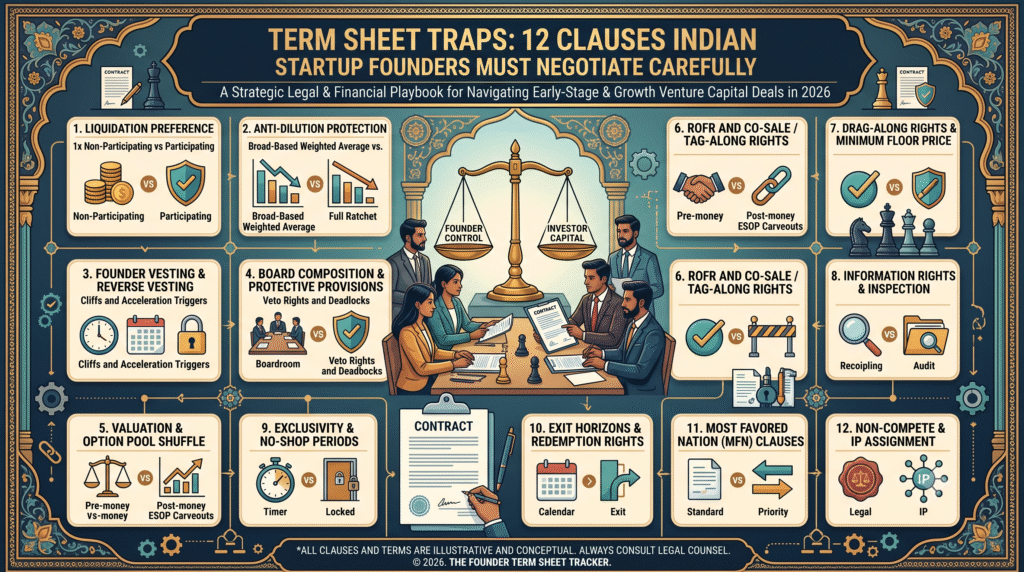
Before accepting investment, founders need to look beyond the headline valuation and understand the terms that can shape their ownership, control and future fundraising.
For Indian startup founders, securing an investor can feel like the biggest milestone in building a business. Yet the term sheet that follows can influence the company for years. While valuation often attracts the most attention, clauses covering control, dilution, exits and investor rights can have an equally significant impact.
A term sheet generally outlines the proposed commercial and legal terms of an investment. Some provisions may be non-binding, while others, such as confidentiality or exclusivity, may be binding depending on the wording. Founders should review the document with a qualified lawyer before signing.
1. Valuation and Option Pool
A high valuation does not automatically mean a better deal. Founders must distinguish between pre-money and post-money valuation and understand whether an employee stock option pool is created before or after the investment. A pool created before the investment can increase dilution for existing shareholders.
2. Liquidation Preference
This clause determines how proceeds are distributed when a company is sold or liquidated. A participating liquidation preference may allow investors to receive their initial investment first and then share in the remaining proceeds. Founders should negotiate the preference multiple, participation rights and applicable circumstances carefully.
3. Anti-Dilution Protection
Anti-dilution provisions protect investors if a future funding round takes place at a lower valuation. Broad-based weighted-average protection generally produces a different outcome from a full-ratchet clause, which can be considerably harsher for founders and existing shareholders.
4. Board Composition
Board seats determine who participates in important company decisions. Founders should clarify how many directors each party can appoint, whether independent directors are required and how the board changes as new investors join.
5. Reserved Matters and Veto Rights
Investors may request approval rights over major decisions, including new fundraising, acquisitions, significant borrowing or changes to business strategy. Excessive veto rights can slow everyday operations. Founders should define these matters narrowly and distinguish major corporate actions from routine management decisions.
6. Founder Vesting
Investors may require founders to earn their shares over time or agree to reverse-vesting arrangements. The agreement should clarify the vesting schedule, any credit for time already served and what happens if a founder leaves because of resignation, illness or termination.
7. Founder Lock-In
Lock-in clauses restrict founders from transferring shares for a specified period. Founders should negotiate reasonable exceptions for estate planning, permitted transfers and other agreed circumstances while respecting legitimate investor protections.
8. Right of First Refusal
A right of first refusal (ROFR) may allow existing investors or the company to purchase shares before a founder sells them to an outside buyer. Founders should understand the notice process, deadlines and whether the right applies to all transfers or only certain transactions.
9. Tag-Along Rights
Tag-along rights allow investors to participate in certain share sales by founders. The clause should specify when the right applies, how much can be sold and how the process works, avoiding unnecessary restrictions on legitimate transactions.
10. Drag-Along Rights
Drag-along provisions can require minority shareholders to participate in an approved company sale. Founders should examine the approval threshold, investor consent requirements and protections ensuring that shareholders receive consistent treatment under the agreed terms.
11. Exclusivity and No-Shop
An exclusivity clause may prevent founders from negotiating with other investors for a defined period. A long exclusivity window can weaken bargaining power if the proposed investor delays closing. Set a clear deadline and consider whether exclusivity should end if the investor fails to meet agreed milestones.
12. Exit Rights and Information Rights
Investors may seek reporting rights, inspection access and mechanisms intended to facilitate a future exit. Founders should agree on practical reporting timelines, confidentiality safeguards and realistic exit-related obligations. Avoid promising a guaranteed buyback or return without specialist legal and regulatory advice.
Read the Entire Deal, Not Just the Valuation
A term sheet should be evaluated as a complete package. A higher valuation may be offset by aggressive liquidation preferences, extensive veto rights or unfavourable dilution provisions.
Indian founders should also confirm that the final investment documents comply with applicable company law and securities regulations. Official resources include the Ministry of Corporate Affairs, India Code and the Securities and Exchange Board of India.
Ultimately, the strongest term sheet is not necessarily the one offering the highest valuation. It is the one that provides capital while preserving a workable balance between investor protection, founder control and the company’s long-term growth.