
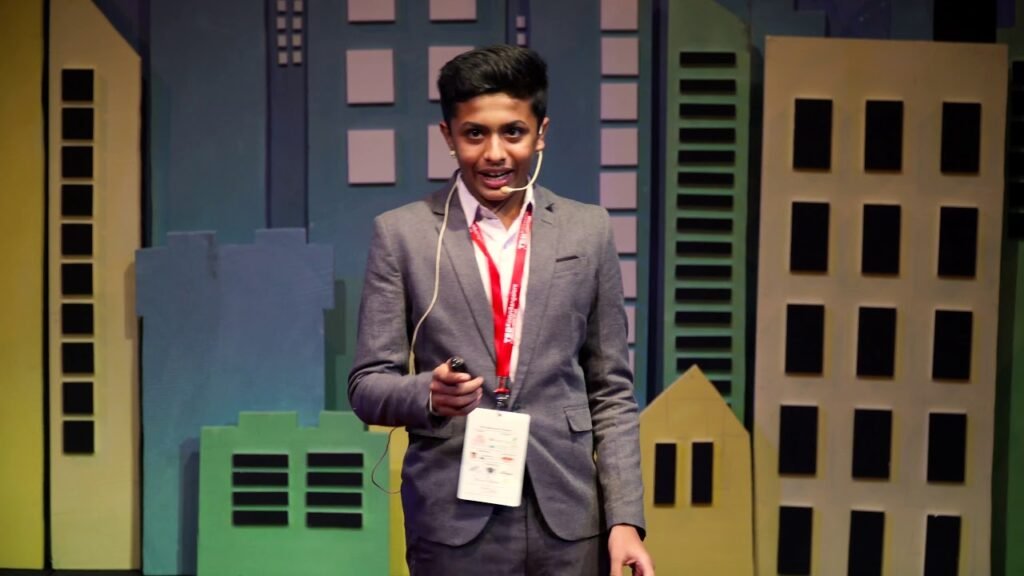
A forgotten set of books, a long journey across Mumbai and an idea inspired by the city’s legendary dabbawalas: that is how Tilak Mehta’s entrepreneurial journey began. At just 13, he developed the concept behind Papers N Parcels, a same-day courier startup designed to make local deliveries faster and more affordable.
The Problem That Sparked an Idea
Tilak Mehta was a school student in Mumbai when an everyday inconvenience gave him a business idea.
He had forgotten some books at his uncle’s home in Borivali and needed them back in Ghatkopar. Getting the books delivered quickly was difficult, while conventional courier services were not always affordable or convenient for urgent, short-distance deliveries.
Instead of accepting the problem, Tilak began thinking about a better solution.
He wondered whether Mumbai’s famous dabbawalas, known for delivering thousands of lunchboxes across the city, could also help transport small parcels and documents.
As he explained in an interview with YourStory, the efficiency of the dabbawala network inspired him to explore a new delivery model.
The Birth of Papers N Parcels
Tilak developed the concept for Papers N Parcels (PNP) in 2017. The venture was formally launched in July 2018, when he was still studying in Class 8.
The idea was straightforward: create a technology-enabled courier service that could connect customers with delivery partners and provide same-day movement of small parcels within Mumbai.
The service focused on documents and packages weighing up to three kilograms, with prices reported to range from approximately ₹40 to ₹180, depending on the parcel.
His father, Vishal Mehta, who had experience in the logistics industry, supported the initial business planning and funding. The company also brought in experienced professionals to help build its technology and manage operations.
Bringing Mumbai’s Dabbawalas into the Model
One of the most distinctive aspects of Papers N Parcels was its approach to last-mile delivery.
Rather than building an entirely new delivery network, the company sought to make use of Mumbai’s existing dabbawala ecosystem.
Tilak spent time understanding how the dabbawalas operated, including their routes, schedules and delivery practices. The idea was to use their knowledge of the city after their regular lunchbox delivery work was completed.
According to Business Standard’s 2018 report, the startup had more than 300 registered dabbawala delivery partners and an additional workforce of around 180 people at that stage.
The arrangement offered participating delivery partners an opportunity to earn additional income while helping the company reach customers across the city.
Importantly, the Mumbai Dabbawala Association clarified at the time that it had not formally partnered with the startup; individual dabbawalas could choose to participate.
Technology at the Heart of the Business
Papers N Parcels used a mobile application to simplify the courier process. Customers could place delivery requests, arrange pickups and track their orders.
The service aimed to connect individuals and businesses looking for reliable local delivery solutions.
Its potential customer base included pathology laboratories, retailers, corporate organisations and individuals who needed documents or small packages transported quickly.
A Moneycontrol report from January 2019 described the app’s same-day delivery, live-tracking and door-to-door service features.
The business demonstrated how technology could complement an existing offline network rather than replace it entirely.
A Young Founder with an Experienced Team
Although Tilak was the face and founder of the venture, he understood that building a logistics company required experienced professionals.
He brought in Ghanshyam Parekh, a banker who joined as the company’s chief executive, along with other professionals who helped with technology and operations.
His father also played an important role in supporting the business.
This combination of youthful ambition and experienced guidance helped Papers N Parcels move from an idea to an operating service.
Recognition and the Bigger Lesson
Tilak’s story attracted national attention because he was still a teenager when he entered the competitive logistics industry.
Media organisations including The Economic Times and NDTV covered his business idea and its collaboration with individual dabbawalas.
His journey demonstrated that entrepreneurship can begin with observing an everyday problem and finding an innovative way to solve it.
The Tilak Mehta Story
Papers N Parcels began with a simple need: getting forgotten books across Mumbai without waiting for conventional courier services.
Tilak Mehta transformed that experience into a business concept by combining mobile technology with the local knowledge of an established delivery network.
His story is a reminder that innovation does not always require inventing something completely new. Sometimes, it means looking at existing resources differently and finding a smarter way to connect them.
From a school student’s idea to a technology enabled logistics venture, Tilak’s journey remains an interesting chapter in India’s young entrepreneurship story.