
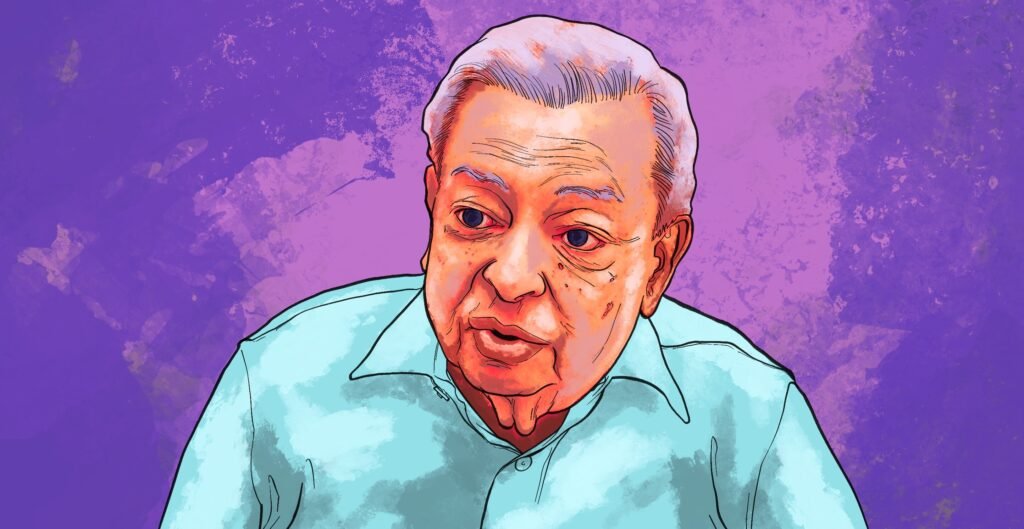
Verghese Kurien was born on November 26, 1921, in Kozhikode, Kerala. He studied physics at Loyola College, Chennai, and later earned an engineering degree from the University of Madras.
He subsequently received a Government of India scholarship to study dairy engineering in the United States, completing his postgraduate education at Michigan State University in 1948.
In May 1949, Kurien arrived in Anand, Gujarat, to fulfil a government service obligation at an experimental dairy creamery. Initially, he had no plans to build a dairy business or remain in the town permanently.
However, his encounter with Tribhuvandas Patel, who was leading a cooperative movement among local milk producers, changed the direction of his career.
The Beginning of the Amul Movement
During the 1940s, dairy farmers in the Kaira district faced difficulties selling their milk. Middlemen and private traders controlled much of the collection and distribution system, leaving producers with limited bargaining power.
Under Tribhuvandas Patel’s leadership, farmers had established the Kaira District Cooperative Milk Producers’ Union in 1946.
Kurien joined the effort by providing technical and managerial expertise. He eventually became the cooperative’s general manager and helped develop its processing facilities, production systems and distribution network.
The cooperative began marketing its products under the Amul brand, which became a symbol of farmer-owned enterprise.
The important distinction is that Amul emerged from a farmers’ cooperative movement led by Tribhuvandas Patel, while Kurien played a crucial role in building its operational and commercial strength.
The Amul Dairy profile of Dr. Kurien documents his contribution to the development of the cooperative and its brand.
Building a Business Owned by Farmers
Kurien’s approach was different from the conventional corporate model. Instead of concentrating ownership in the hands of a few investors, he supported a cooperative structure in which milk producers collectively owned the organisation.
The Anand model developed through three interconnected levels:
- Village level societies: Farmers supplied milk and became members of local cooperatives.
- District level milk unions: These organisations collected, processed and handled milk production.
- State level marketing federations: These federations marketed products and built consumer brands.
This structure connected rural producers directly with urban consumers.
It also gave farmers greater control over procurement, pricing and the income generated from their work.
The White Revolution: Operation Flood
One of Kurien’s most important achievements was his leadership of Operation Flood, launched in 1970 through the National Dairy Development Board (NDDB).
The programme aimed to increase milk production, improve distribution, strengthen village cooperatives and provide dairy farmers with more reliable markets.
Operation Flood was implemented in three phases between 1970 and 1996. It expanded dairy cooperatives across the country and connected milk-producing regions with major urban markets.
A national milk grid helped reduce seasonal and regional supply differences while improving access to milk for consumers.
The NDDB’s official Operation Flood history explains how the programme helped establish a nationwide cooperative dairy network.
The initiative transformed India’s dairy industry. The country moved from depending on milk imports to becoming the world’s largest milk producer.
This transformation became known as the White Revolution, and Kurien earned the title “Father of the White Revolution in India”.
Establishing Institutions Beyond Amul
Kurien believed that long-term development required strong institutions, professional management and technical expertise.
In 1965, he became the first chairman of the National Dairy Development Board. He held the position until 1998.
In 1973, he helped establish the Gujarat Cooperative Milk Marketing Federation (GCMMF), the organisation responsible for marketing Amul products.
He also founded the Institute of Rural Management Anand (IRMA) in 1979 to develop professional managers for rural development organisations and cooperatives.
These institutions helped extend the cooperative model beyond a single dairy business and made it a framework for broader rural development.
Recognition for Transforming Indian Agriculture
Kurien’s contribution earned him recognition in India and internationally.
Some of his major honours included:
- Ramon Magsaysay Award (1963): For community leadership.
- Padma Shri (1965): One of India’s highest civilian honours.
- Padma Bhushan (1966): For his contribution to the nation.
- World Food Prize (1989): Recognising his contribution to food production and development.
- Padma Vibhushan (1999): India’s second-highest civilian award.
He also received the Krishi Ratna Award and several international recognitions.
The Ramon Magsaysay Award Foundation documents his contribution to dairy cooperatives and rural development.
The Legacy of the Milkman of India
Verghese Kurien passed away on September 9, 2012, at the age of 90. His birthday, November 26, is observed as National Milk Day in India.
His legacy is visible not only in Amul products found across Indian households but also in the cooperative institutions that support millions of dairy producers.
Kurien demonstrated that farmers could become owners of a large, professionally managed enterprise without losing control over the value they created.
His journey was not simply about building a successful dairy brand. It was about changing the relationship between farmers, markets and consumers.
From an engineer who arrived in Anand for a government assignment to the architect of India’s White Revolution, Verghese Kurien helped turn a local cooperative movement into a national transformation.
His enduring message was simple: when producers control their own institutions, they can shape their economic future.