
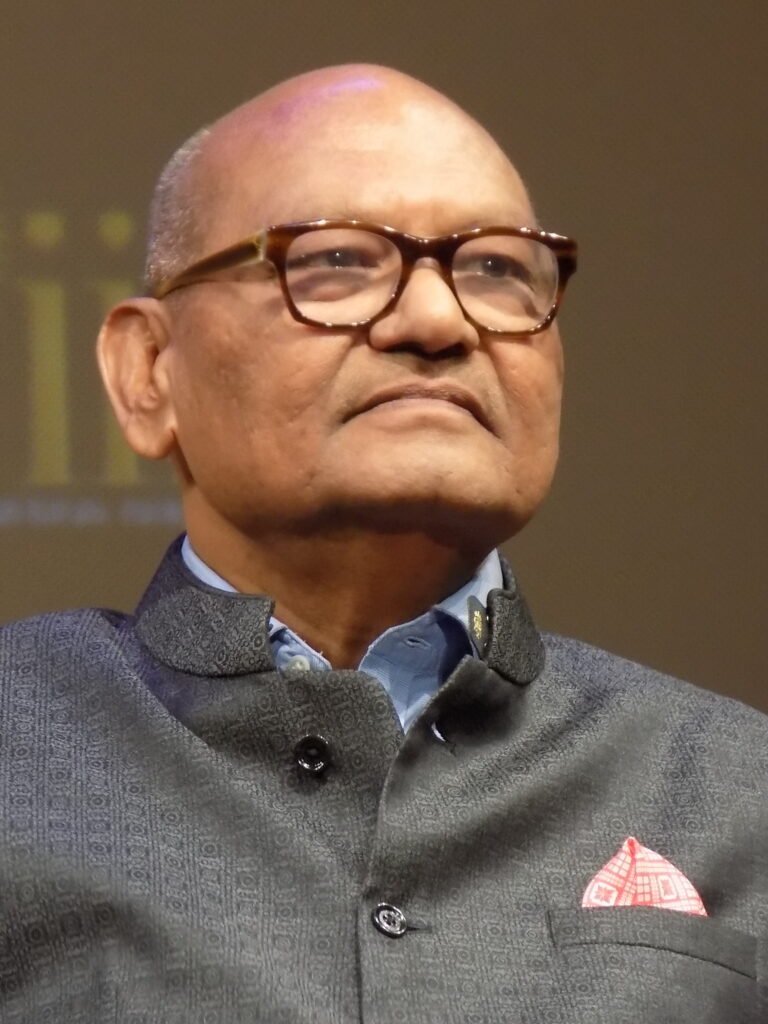
How an entrepreneur from Patna transformed a modest metals business into an international natural resources conglomerate
Anil Agarwal’s journey is a story of ambition, risk-taking and determination. Starting his career in Mumbai with limited resources, he went on to build Vedanta into a global natural resources group with interests spanning metals, mining, oil and gas, and energy. His rise reflects the transformation of an Indian entrepreneur into an influential figure in the international mining and metals industry.
Early Life and the Move to Mumbai
Anil Agarwal was born in 1954 in Patna, Bihar, into a Marwari business family. His father operated a small business manufacturing aluminium conductors, giving him an early introduction to entrepreneurship and trade.
Rather than follow a conventional university education, Agarwal chose to join the family business. At the age of 19, he left Patna for Mumbai, carrying modest belongings and ambitions of establishing himself in the commercial world.
His early years in the city were challenging. He explored different business opportunities, including metal trading, and experienced several setbacks. These experiences helped him understand markets, customers and the importance of persistence.
The First Steps Towards Vedanta
Agarwal’s business journey began with trading in scrap metal and other commodities. In 1976, he established a business that eventually developed into the Vedanta Group.
One of his early ventures involved importing and trading metals. He gradually moved from trading into manufacturing, focusing on products such as aluminium conductors and cables.
The business expanded as he identified opportunities in India’s growing demand for industrial materials. His strategy was to build manufacturing capabilities and enter sectors connected to the country’s infrastructure and industrial development.
Building Sterlite and Expanding into Metals
A major turning point came with the development of Sterlite Industries, which became an important part of Agarwal’s business expansion.
The group moved into copper, aluminium and other metals, building a broader industrial presence. It also pursued acquisitions and investments to strengthen its position in the natural resources sector.
As the business grew, Agarwal looked beyond India’s domestic market. International expansion and access to global capital became central to the group’s strategy.
In 2003, Vedanta Resources was listed on the London Stock Exchange, becoming the first Indian company to achieve a primary listing on the exchange. The listing marked an important milestone in the group’s international development.
Acquisitions That Changed the Group’s Scale
Agarwal’s growth strategy relied significantly on acquisitions. The group expanded into zinc, lead, silver, iron ore and oil and gas, adding new businesses and resources to its portfolio.
Among its important developments were the acquisition of a controlling interest in Hindustan Zinc and the acquisition of Cairn India’s oil and gas business.
These transactions helped Vedanta develop into a diversified natural resources company with operations across several countries.
Its businesses have included aluminium, zinc, silver, copper, iron ore, steel, power and oil and gas. The group has also explored opportunities in areas connected to India’s growing demand for critical minerals and industrial materials.
A Vision for India’s Resource Sector
Agarwal has frequently spoken about the importance of making India more self-reliant in natural resources. He believes domestic production of metals and minerals can support infrastructure development, manufacturing and economic growth.
Through Vedanta, he has advocated greater investment in mining, exploration and industrial capacity.
The group’s long-term ambitions have also included investments in technology and manufacturing capabilities, reflecting the growing importance of minerals and materials in the global energy transition.
Philanthropy and Social Initiatives
Beyond business, Agarwal has supported social-development initiatives through the Anil Agarwal Foundation, the philanthropic and corporate social responsibility arm associated with Vedanta.
One of its prominent programmes is Nand Ghar, which works to modernise Anganwadi centres and improve services related to nutrition, healthcare, early childhood education and women’s empowerment.
The initiative reflects Agarwal’s stated interest in supporting rural communities and improving access to essential services.
The Legacy of an Entrepreneur
Today, Anil Agarwal is recognised as the founder of Vedanta Group and a prominent figure in India’s natural resources industry. He serves as Executive Chairman of Vedanta Resources and Non-Executive Chairman of Vedanta Limited.
His journey from a small trading operation in Mumbai to an international business group illustrates the role of ambition, strategic acquisitions and industrial investment in building a large enterprise.
Agarwal’s story is also a reminder that entrepreneurship is rarely a straight path. His early setbacks, gradual expansion and willingness to enter new industries helped shape the business that eventually became Vedanta.