




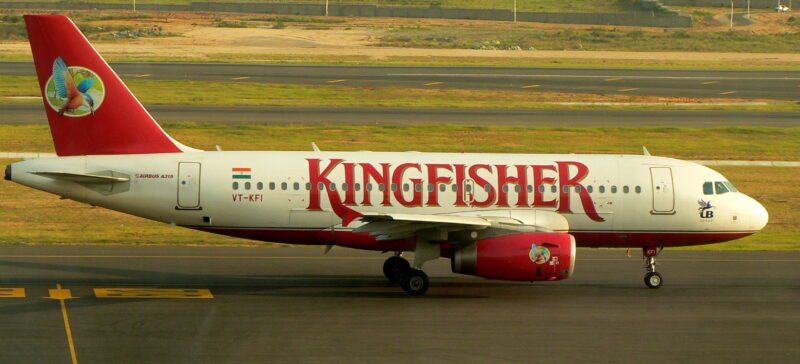
The collapse of Vijay Mallya’s Kingfisher Airlines is often remembered as a story of banks lending thousands of crores against an airline logo. The reality was more complicated, involving aggressive lending, restructuring, collateral valuations and a business that eventually collapsed.
The ₹9,000-Crore Debt
Kingfisher Airlines borrowed heavily from a consortium of banks led by State Bank of India. By the time the airline defaulted, its dues had grown to around ₹9,000 crore, including interest.
The airline was eventually grounded in October 2012 after years of financial difficulties.
The Brand Valuation
One of the most controversial parts of the case was the valuation of Kingfisher’s brand.
Grant Thornton valued the airline’s brand and trademarks at about ₹4,111 crore. Several Kingfisher trademarks were later pledged to lenders as collateral.
The figure looked impressive on paper, but its real world value proved very different.
The Collateral Problem
When Kingfisher began struggling, its aircraft were largely leased rather than owned. This left lenders with limited hard assets to rely on.
The airline’s trademarks therefore became an important part of the collateral structure.
But a brand is fundamentally different from physical property. Its value depends heavily on the business behind it.
When Kingfisher Collapsed
Kingfisher Airlines stopped flying in October 2012.
With the airline gone, the commercial value of its brand changed dramatically. A name once associated with premium air travel became associated with grounded flights, unpaid employees and financial distress.
The ₹4,111-crore valuation could no longer translate easily into cash.
The Failed Auctions
Between 2014 and 2016, lenders attempted to sell Kingfisher’s trademarks.
In 2016, nine trademarks were put up for auction with a reserve price of about ₹366.70 crore.
There were no bidders.
The reserve price was subsequently reduced, but the trademarks still failed to attract buyers.
The ₹7,000-Crore Recovery
The eventual recovery came largely from tangible and financial assets—not from the Kingfisher brand.
Lenders recovered money through assets including pledged shares and properties. Kingfisher House in Mumbai and Kingfisher Villa in Goa were among the assets sold during the recovery process.
By July 2021, the Enforcement Directorate said the SBI-led consortium had recovered ₹7,181.50 crore through liquidation of assets handed over to the banks, followed by another ₹792.11 crore from the sale of shares.
The Real Lesson
The Kingfisher episode was not simply a case of banks being “scammed by a logo.”
It was a much broader failure involving lending decisions, risk assessment, restructuring and the assumptions behind asset valuations.
The biggest lesson is simple:
A valuation on paper is not the same as recoverable value.
When the business supporting an intangible asset disappears, even a multibillion-rupee brand can become almost impossible to monetise.