





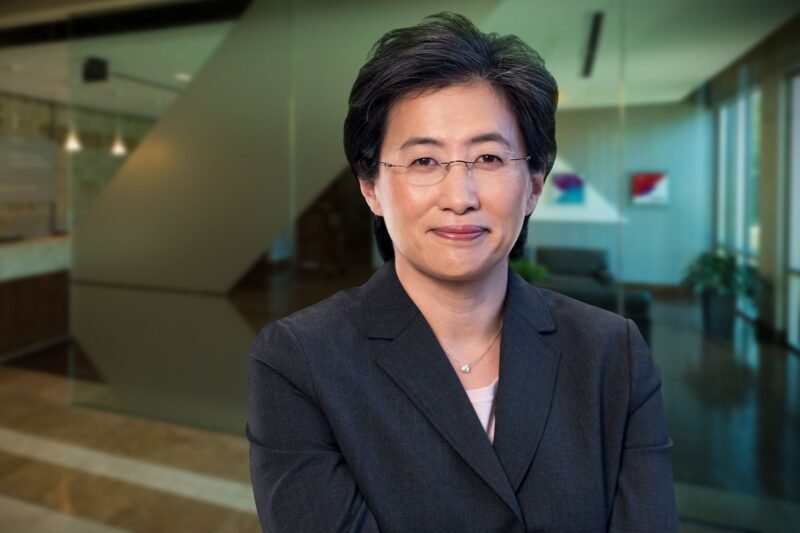
She inherited a struggling semiconductor company, made a long-term bet on engineering and helped turn AMD into a major competitor in high-performance computing. Lisa Su’s journey shows how technical expertise and strategic discipline can transform a technology business.
An Engineer Who Wanted to Build the Future
Lisa Su’s journey began with a fascination for how technology works. Born in Taiwan in 1969, she moved to the United States as a child and developed an early interest in mathematics, science and engineering.
She studied electrical engineering at the Massachusetts Institute of Technology (MIT), earning bachelor’s, master’s and doctoral degrees. Rather than focusing only on business management, Su built her career around understanding semiconductor technology and how it could improve computing.
Before joining AMD, she worked at Texas Instruments, IBM and Freescale Semiconductor, gaining experience in chip research, engineering leadership and product development.
Her technical background would later become central to her approach to leading one of the semiconductor industry’s most recognised companies. Her career is documented on AMD’s official leadership website.
Taking Charge of a Company Under Pressure
Su joined Advanced Micro Devices (AMD) in 2012 and became its chief executive officer in October 2014.
At the time, AMD faced intense competition in the processor market and needed to strengthen its financial position and product strategy. The company had a long history in computing, but competing against established rivals required a clear direction and sustained investment.
Su’s challenge was to identify where AMD could compete effectively rather than attempting to dominate every segment of the technology industry.
She emphasised product quality, customer relationships and disciplined execution. Instead of pursuing quick fixes, the company focused on developing stronger processors and building a more competitive technology portfolio.
AMD’s official announcement of Su’s appointment outlined the company’s intention to pursue sustainable growth under her leadership.
Betting on High-Performance Computing
One of Su’s most important strategic decisions was to strengthen AMD’s position in high-performance computing.
The company invested in processor architectures designed to improve computing performance across personal computers, gaming systems and data centres. These markets required years of engineering work, making consistent investment essential.
AMD’s Ryzen processors helped strengthen its position in the PC market, while its EPYC server processors targeted the growing demand for computing power in data centres.
These products gave AMD more opportunities to compete for customers seeking performance, efficiency and alternatives to existing suppliers.
The strategy demonstrated a central principle of technology leadership: meaningful product improvements often require long development cycles, and companies must continue investing even when results are not immediate.
From Processors to Artificial Intelligence
As artificial intelligence expanded, demand increased for the specialised computing hardware needed to train and run advanced models.
AMD entered this market with AI accelerators and data-centre products designed for demanding computing workloads. Its broader portfolio allowed the company to compete across CPUs, GPUs and adaptive computing technologies.
The opportunity also brought new challenges. Competing in AI requires substantial research investment, software development, manufacturing partnerships and strong relationships with customers building large computing systems.
Su’s strategy has therefore involved more than designing individual chips. It has required developing a broader technology ecosystem capable of supporting customers across different applications.
More information about AMD’s products and strategy is available on the official AMD website.
Lessons for Technology Entrepreneurs
Lisa Su’s story offers three important lessons.
First, deep technical knowledge can be a powerful leadership advantage in an engineering-driven industry. Second, a company can regain competitiveness by focusing on its strengths and committing to long-term product development. Third, transformation requires patience, execution and the ability to adapt as markets evolve.
Su did not found AMD; she joined the company and led its transformation. That distinction makes her journey particularly valuable for understanding how experienced leaders can reshape an established technology business.
The Bigger Takeaway
Lisa Su’s career demonstrates that turning around a technology company is not about making one dramatic decision. It is about repeatedly investing in better products, strengthening teams and delivering results over time.
For aspiring tech founders and business leaders, her example offers a practical reminder: ambitious goals matter, but they must be supported by technical excellence, clear priorities and the discipline to keep building when success takes years to arrive.