
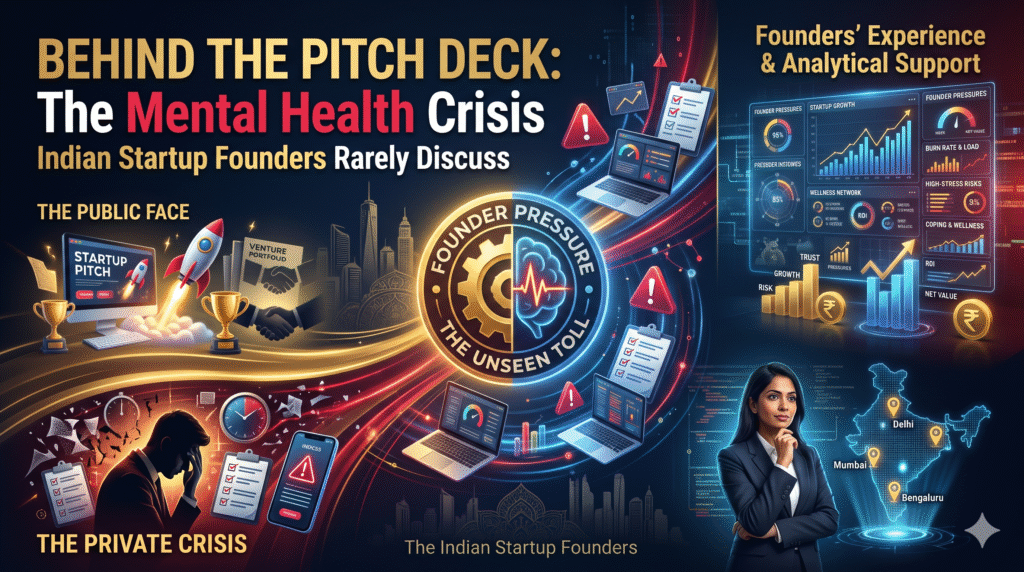
Funding pressure, relentless uncertainty and the expectation to keep succeeding can take a personal toll on entrepreneurs. Building healthier startup cultures begins with acknowledging the person behind the business.
India’s startup ecosystem celebrates ambitious founders, rapid growth, fundraising milestones and successful exits. Yet behind the pitch decks and product launches lies another side of entrepreneurship: the emotional burden of building a company.
Founders are expected to make difficult decisions, motivate employees, satisfy investors and manage financial uncertainty, often simultaneously. While conversations about revenue and profitability are routine, discussions about anxiety, exhaustion and emotional distress can remain uncomfortable.
Founder mental health deserves attention not as a personal weakness, but as an important part of building sustainable businesses.
The Pressure of Always Being in Control
Unlike many employees, founders may feel responsible for every aspect of their company. A delayed funding round, losing a major customer or missing a growth target can affect not only the business but also employees, investors and family finances.
Early-stage entrepreneurs frequently operate with limited resources and uncertain outcomes. Long working hours and blurred boundaries between personal and professional life can make it difficult to switch off.
The pressure can become particularly intense when founders believe they must project confidence even when they are unsure about the next step.
Why Founders Stay Silent
Startup culture often rewards resilience, speed and relentless execution. These qualities can be valuable, but they can also create an environment where admitting difficulty feels risky.
Founders may worry that investors will interpret stress as poor leadership or that employees will lose confidence if a leader expresses uncertainty. Some may compare themselves with other entrepreneurs who appear successful online, overlooking the setbacks that are less visible.
Silence can delay support. Recognising emotional distress early is not a sign of failure; it is an opportunity to address problems before they become harder to manage.
Burnout Is More Than Tiredness
Persistent exhaustion, difficulty concentrating, irritability, sleep disruption and a sense of detachment can indicate that stress is affecting a person’s wellbeing. These experiences have different possible causes, so they should not automatically be treated as a diagnosis.
The World Health Organization identifies excessive workloads, long or inflexible hours, job insecurity and limited workplace support as risks to mental health.
For founders, these pressures can be compounded by financial exposure and the feeling that nobody else can make the final decision. Regular rest, realistic priorities and professional support can help, but meaningful change may also require changing the conditions that create persistent stress.
Investors and Boards Have a Role
Founder wellbeing should not be treated solely as an individual’s responsibility. Investors and board members can help create healthier expectations by encouraging realistic milestones, transparent conversations about business risks and responsible financial planning.
Regular board discussions can include workload, leadership capacity and succession planning alongside financial performance. Investors should also recognise that sustainable decision-making is more valuable than a culture of permanent urgency.
Founders, in turn, can build stronger teams by delegating responsibilities, establishing clearer boundaries and creating an environment where employees can raise concerns without fear of humiliation.
Building a Healthier Founder Culture
Practical steps matter more than occasional wellness campaigns. Founders can protect time for sleep, exercise and relationships, schedule breaks after demanding periods and maintain trusted relationships outside the company.
Speaking with a qualified mental health professional can provide confidential support and help individuals develop ways to manage ongoing stress. Peer groups can also create space for honest conversations, provided they respect privacy and do not replace professional care when needed.
In India, the government’s Tele-MANAS service provides free, round-the-clock tele-mental-health support. The helpline can be reached at 14416.
Success Should Not Come at Any Cost
A startup’s progress should not depend on its founder sacrificing their wellbeing indefinitely. Healthy leadership involves recognising limits, asking for help and creating systems that allow the business to function without constant personal overextension.
India’s entrepreneurial culture can become stronger when founders are encouraged to speak honestly about the challenges behind building a company. The conversation should not begin only after a crisis.
Ultimately, a successful founder is not someone who never struggles. It is someone who can build, adapt and lead while recognising that personal wellbeing matters just as much as business performance.