




The city was changing, businesses were expanding, and Dalal Street was buzzing.
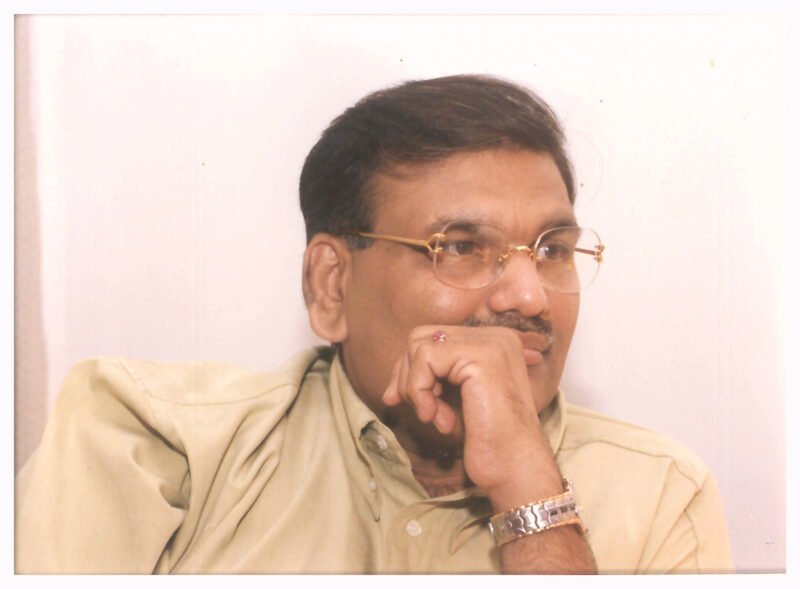
At the centre of the excitement was Harshad Mehta, a stockbroker who became popularly known as the “Big Bull”.
His confidence, lifestyle and spectacular market positions made him one of India’s biggest financial celebrities.
Investors began believing that Harshad understood something about the market that nobody else did.
And then came ACC Cement.
Its share price rose from around ₹200 to nearly ₹9,000 during the market boom.
People rushed to buy.
“Harshad is buying!”
“Then we should buy too!”
The market was no longer just about numbers.
It was becoming a frenzy.
The Loophole
But the real story wasn’t happening inside the stock exchange.
It began inside the banking system.
Banks regularly traded government securities through Ready Forward (RF) deals.
These transactions depended heavily on documents called ‘bank receipts’ (BRs).
A genuine BR represented an obligation connected to a securities transaction.
But the system had weaknesses.
Investigations found that some banks issued BRs without the government securities that were supposed to back them.
That meant a piece of paper could help unlock enormous amounts of money.
And some of that money found its way into the stock market.
The Bull Run
With huge amounts of money entering the market, buying pressure increased.
Prices climbed.
Rising prices attracted more investors.
More investors brought more money.
And the cycle continued.
The BSE Sensex, which was around 2,300 in January 1992, reached 4,467 on April 22, 1992.
To ordinary investors, it looked like a financial revolution.
Harshad appeared unstoppable.
But behind the spectacular rise, questions were beginning to emerge.
Where was all this money coming from?
The Journalist
Then came Sucheta Dalal.
On April 23, 1992, she reported on a major discrepancy involving State Bank of India’s securities transactions with Harshad Mehta.
The amount initially discussed was around ₹500 crore, though the figure connected with the SBI episode was subsequently reported at approximately ₹770 crore.
Suddenly, the story changed.
People stopped asking.
“How is Harshad making so much money?”
They started asking:
“Where is the money coming from?”
That question would shake India’s financial system.
The Collapse
Once the irregularities became public, confidence began disappearing.
The market turned.
Investors rushed to sell.
Banks demanded their money.
Transactions were investigated.
Documents were questioned.
And the spectacular bull run began collapsing.
The scandal wasn’t simply about one stock or one broker.
Investigations uncovered irregularities involving multiple banks, brokers and financial institutions.
Harshad Mehta became the most recognisable face of the scandal, but other brokers were also involved.
₹4,024 Crore
The scandal became known as the 1992 Securities Scam.
The Janakiraman Committee estimated the amount involved at approximately ₹4,024 crore, although different estimates were reported depending on what transactions and losses were included.
Thousands of investors were affected.
The market’s biggest lesson wasn’t simply that prices could rise too quickly.
It was that a financial system built on trust without adequate verification could be dangerously fragile.
The Lesson
Harshad Mehta’s rise made him a celebrity.
His fall made him a symbol of one of India’s most famous financial scandals.
But the story wasn’t only about the Big Bull.
It was about banks.
It was about paperwork.
It was about regulation.
And above all, it was about following the money.
Because when everyone is shouting—
“BUY! BUY! BUY!”
—The smartest person in the room may be the one quietly asking:
“But where did the money come from?”
In 1992, Sucheta Dalal asked that question.
And India’s financial system would never look quite the same again.