





In 2016, India’s digital life was about to change forever.
At the centre of this transformation was Reliance Jio, a company that entered the telecom market with an audacious idea: make high-speed internet affordable enough for millions of Indians.
But Jio’s real ambition was much bigger than selling mobile data.
It was about building an ecosystem.
The Plan Was Bigger Than a SIM Card
Before Jio became a household name, Reliance had spent years building a nationwide 4G network.
The investment was enormous, reported to be around ₹1.5 lakh crore by the time of its commercial launch.
Then came the disruption.
In September 2016, Jio commercially launched with extremely attractive introductory offers, including free voice calls and very low-cost data.
For consumers, it felt like a telecom revolution.
For competitors, it was a warning.
Jio wasn’t simply asking:
“How many customers can we get?”
The bigger question was:
“What can we build once millions of Indians are connected?”
First, Get India Online
Jio understood something crucial.
A telecom network could be more than infrastructure.
It could become the gateway to the internet.
The strategy was simple but powerful:
Connect people first. Build services around them later.
As smartphones and affordable data became more accessible, millions of Indians began consuming digital content at a scale never seen before.
Video streaming exploded.
Social media usage grew.
Digital payments became increasingly common.
Online shopping expanded.
The Indian consumer was rapidly moving from an offline world to a digital one.
And Jio wanted to be present throughout that journey.
From Telecom to Entertainment
Once connectivity became its foundation, Reliance began expanding the ecosystem.
Entertainment became one of the biggest pieces.
Through services and businesses associated with the Jio ecosystem, consumers could watch movies, television shows, sports and other digital content.
The strategy was clever.
A customer might initially come to Jio because of cheap internet.
But eventually, the same customer could use Jio’s network to watch entertainment, shop online, access financial services and use digital applications.
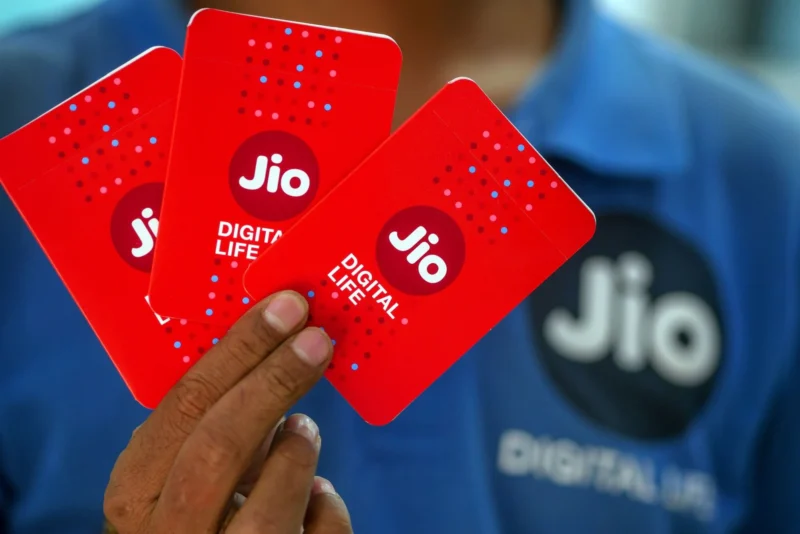
The SIM card was no longer the entire product.
It was becoming the entry point.
Then Came Commerce
The next opportunity was shopping.
Reliance expanded its digital ambitions through JioMart, connecting its enormous retail presence with the growing digital consumer.
Imagine the journey:
A customer uses Jio for internet connectivity.
That customer watches content.
Then discovers products.
Then shops online.
The more services that become part of the same ecosystem, the more valuable the relationship becomes.
This is where the real business strategy becomes visible.
Jio wasn’t necessarily trying to make every individual service the customer’s only choice.
It was trying to make the ecosystem itself difficult to leave.
Finance Joins the Picture
The ecosystem expanded further into financial services through Jio Financial Services.
Now connectivity, entertainment, commerce and finance could exist within the broader Reliance digital universe.
The ambition was no longer simply:
“Sell more data.”
It was:
“Become part of more moments in the customer’s digital life.”
That distinction changed everything.
The Power of One Customer
Consider a hypothetical Jio customer named Rahul.
In the morning, Rahul uses Jio connectivity to check social media.
During lunch, he watches a video.
In the evening, he streams a movie.
Later, he orders something online.
He may also use digital financial services.
Each individual activity represents a different opportunity.
But from Jio’s perspective, they can all be connected through the same digital ecosystem.
One customer.
Multiple services.
Multiple interactions.
And potentially, multiple revenue streams.
That is the real power of an ecosystem business.
The Smartphone Was Another Piece
Reliance also entered the affordable-device market, including JioPhone, making digital connectivity accessible to people who might not otherwise have owned an expensive smartphone.
The idea was consistent:
Reduce the barriers to entering the digital world.
Affordable connectivity.
Affordable devices.
Digital content.
Commerce.
Financial services.
A growing collection of applications and platforms.
Each piece strengthened the others.
The Bigger Business Lesson
Jio’s story offers a powerful lesson for entrepreneurs.
A company doesn’t always have to remain trapped inside the product with which it began.
A telecom company can become a technology company.
A retail company can become a digital-commerce company.
A connectivity provider can become the foundation for entertainment, commerce and financial services.
The important question is:
What does your customer need next?
Jio’s transformation was built around that question.
From Data to Digital Life
The biggest achievement wasn’t simply making mobile data cheaper.
It was helping accelerate India’s transition toward a mobile-first digital economy.
Connectivity became the foundation.
On top of that foundation came content, commerce, applications, devices and financial services.
The strategy resembled building a city.
First, build the roads.
Then bring people onto them.
Then build shops, entertainment, services and businesses around those roads.
Eventually, the roads are no longer the only attraction.
The entire city becomes the destination.
The Final Lesson
Jio’s story isn’t simply about telecom competition.
It is a story about scale, ecosystem thinking and long-term strategy.
The company entered India’s telecom market by offering consumers something they desperately wanted: affordable, high-speed connectivity.
But connectivity was only the beginning.
The bigger ambition was to build a digital ecosystem around the Indian consumer.
And that is perhaps the most important lesson for any entrepreneur:
Don't just sell a product. Build a reason for customers to keep coming back.Because sometimes, the biggest business isn’t the product you launch.
It’s the ecosystem you build around it.