




From a small partnership between a candle maker and a soap maker in 1837 to a multinational company with some of the world’s most recognised household brands, Procter & Gamble (P&G) has built its legacy by understanding everyday consumers. Its story is one of innovation, marketing, research, and the power to create products that become part of daily life.
An Unlikely Partnership in Cincinnati
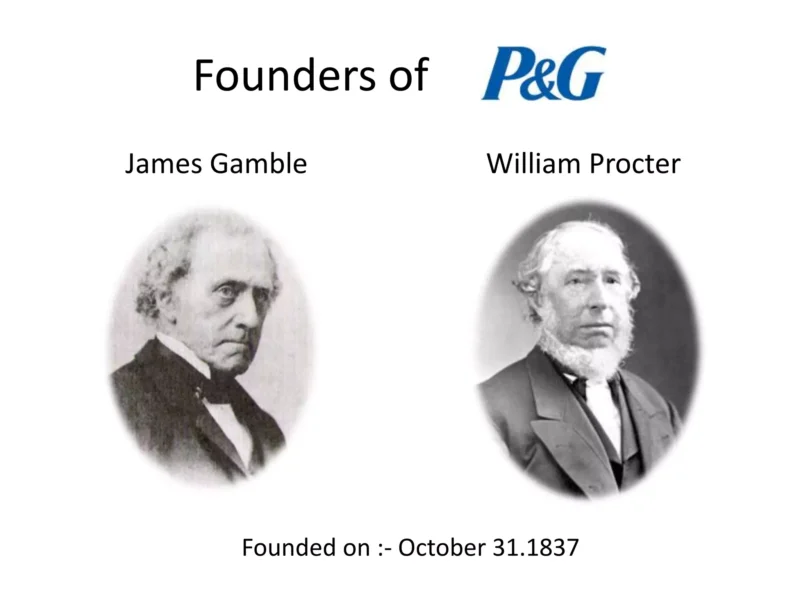
The story of Procter & Gamble began in 1837 in Cincinnati, Ohio, when two entrepreneurs, William Procter and James Gamble, joined forces.
Procter was an English-born candlemaker, while Gamble was an Irish-born soap maker. They had arrived in the United States separately and eventually became connected through family relationships. Their father-in-law, Alexander Norris, encouraged them to combine their businesses.
The partnership created a company that initially manufactured two essential household products: candles and soap.
At a time when households depended heavily on these everyday necessities, the founders saw an opportunity to build a business around quality, reliable production and growing consumer demand.
P&G’s official history records the partnership as the beginning of a company that would go on to influence the global consumer goods industry.
The First Major Breakthrough: Ivory Soap
One of P&G’s earliest defining products was Ivory Soap, introduced in 1879.
The soap became known for its purity and distinctive ability to float in water. Its advertising helped establish a strong identity in the market, making it one of the company’s most memorable early brands.
Ivory demonstrated an important principle that would shape P&G’s future: a product could become much more than a commodity when supported by quality, innovation and consistent branding.
The company continued to expand its manufacturing capabilities and invested in research, opening its first research laboratory in 1890.
The Birth of Modern Brand Management
P&G’s influence extended beyond the products it manufactured. It helped transform how companies marketed and managed consumer brands.
In 1931, company executive Neil McElroy introduced a brand-management approach that gave individual brands dedicated teams and responsibilities.
Instead of treating every product as part of one large company, the model encouraged teams to understand the specific consumers, competitors and marketing opportunities associated with each brand.
This approach became influential across the marketing industry and helped P&G manage an expanding portfolio of products.
The company’s innovation timeline highlights the development of brand management as one of its important historical milestones.
Creating Brands That Became Household Names
During the twentieth century, P&G expanded into several consumer categories and introduced products that became familiar to generations of customers.
Some of its major brands include:
- Tide: Introduced in 1946, it transformed the laundry detergent category.
- Crest: Launched in 1955, it became a major toothpaste brand.
- Pampers: Introduced in 1961, it helped develop the disposable diaper market.
- Head & Shoulders: Launched in 1961, it built a major presence in anti-dandruff hair care.
- Gillette: Became part of P&G’s portfolio following its acquisition in 2005.
- Pantene, Olay, Oral-B and Ariel: Expanded the company’s reach across personal care, beauty and household categories.
These brands allowed P&G to build relationships with consumers across different stages of everyday life.
The Global Expansion
P&G gradually transformed from a regional American manufacturer into an international consumer goods company.
Its products expanded across markets, supported by manufacturing facilities, distribution networks, research centres and local marketing strategies.
Today, the company’s portfolio reaches consumers across approximately 180 countries and territories. Its operations span beauty, grooming, healthcare, fabric care, home care and baby and feminine care.
Its global corporate website provides an overview of its business, brands and operations.
P&G’s Journey in India
P&G’s history in India began in 1985, when it acquired Richardson Hindustan Limited.
Over the years, the company established a strong presence in the country’s fast-moving consumer goods market through brands such as Whisper, Vicks, Ariel, Tide, Pampers, Gillette, Pantene and Head & Shoulders.
Its products addressed everyday consumer needs, while advertising campaigns helped build brand recognition across generations.
The Indian market also became an important part of its manufacturing and distribution network. P&G has highlighted local production and employment as significant parts of its India operations.
Its P&G India website provides information about its brands, business activities and corporate initiatives.
Innovation at the Centre of Its Business
One of the key factors behind P&G’s longevity has been its investment in research and development.
The company has repeatedly used consumer research to identify problems and develop new products. Its innovation history includes improvements in detergents, oral care, baby products and household cleaning.
P&G also developed its Connect + Develop programme to collaborate with external innovators, researchers and organisations.
This approach reflects the company’s belief that useful ideas can emerge both inside and outside a large organisation.
The Legacy of Procter & Gamble
The journey of Procter & Gamble demonstrates how a business built around two basic household products can evolve into a global consumer goods organisation.
Its success has been shaped by a combination of product development, brand management, consumer understanding and international expansion.
From Ivory Soap and Tide to Pampers, Gillette and Ariel, and P&G, it has repeatedly turned everyday needs into large consumer categories.
Nearly two centuries after its founding, the company remains an important example of how consistent innovation and strong brand identities can help a business remain relevant across generations.