


India’s e-commerce revolution initially centered on categories such as electronics, fashion and travel. But Supam Maheshwari saw an opportunity in a market with a very different set of requirements: products for babies and children.
Parents often need to buy frequently changing sizes, age-specific products, toys, clothing, feeding supplies and other essentials. Maheshwari believed technology could make that fragmented shopping experience more convenient.
That idea eventually became FirstCry.
An Entrepreneurial Beginning
Supam Maheshwari studied engineering at IIT Delhi before completing an MBA from IIM Ahmedabad.
His first major entrepreneurial venture was Brainvisa Technologies, an education technology company that he co-founded in the early 2000s.
The experience gave him an understanding of building technology businesses, managing teams and serving customers through digital platforms.
After Brainvisa, Maheshwari turned his attention to a completely different consumer opportunity.
Seeing the Parenting Market
The Indian market for children’s products was large but fragmented.
Parents could find products through local stores, specialty retailers and emerging online marketplaces, but finding a wide range of products in one place was not always easy.
Maheshwari identified an opportunity to build a specialized platform dedicated to babies and children.
The focus was important because parents have needs that vary considerably depending on a child’s age and stage of development.
Building FirstCry
FirstCry was founded in 2010.
The platform initially focused on baby and children’s products, including clothing, footwear, toys, diapers, feeding products and other essentials.
Rather than attempting to compete as a general-purpose marketplace, FirstCry concentrated on a specific customer group.
That specialization allowed the company to build a large assortment around parenting and childhood.
Understanding Parents as Customers
Parenting purchases are different from many ordinary consumer purchases.
Parents often care about safety, quality, age suitability, brand reputation and product availability.
They may also purchase the same category repeatedly as children grow.
FirstCry’s model was designed around these recurring requirements.
The platform could organize products by age, category and need, making it easier for parents to discover suitable products.
From Online Store to Larger Ecosystem
As the business grew, FirstCry expanded beyond its original online model.
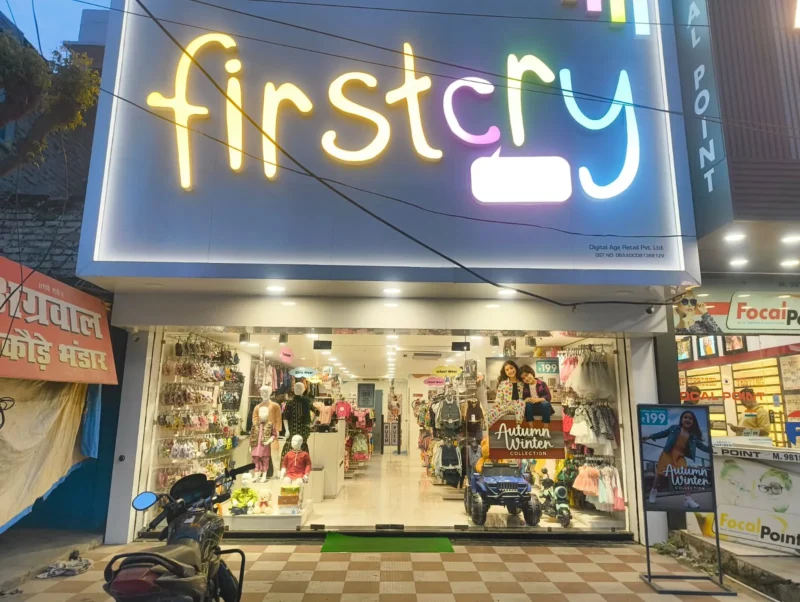
The company developed a network of physical stores, allowing customers to shop through both digital and offline channels.
This omnichannel approach became particularly relevant for products such as clothing, footwear and baby equipment, where some customers prefer to see or try products before purchasing.
The company also expanded its ecosystem through acquisitions and partnerships.
Entering the Parenting Services Space
FirstCry’s broader strategy eventually moved beyond products.
The company became associated with services and content related to parenting and early childhood.
This created an ecosystem around the customer rather than focusing only on individual transactions.
The underlying idea was that a parent may have many different needs during a child’s early years, creating opportunities for a specialized business to serve them across multiple categories.
The Importance of Scale
A children’s marketplace depends heavily on assortment.
Parents want choices across different brands, price points and product categories.
Building that selection requires relationships with manufacturers, distributors and retailers.
At the same time, the company needs logistics systems capable of delivering products across a large geographic area.
FirstCry’s growth therefore involved much more than creating a website. It required building the infrastructure behind a specialized retail network.
A Major Corporate Milestone
FirstCry’s parent company, Brainbees Solutions, became publicly listed in India in 2024.
The listing represented another stage in the evolution of a company that had started more than a decade earlier as a focused online retailer.
It also reflected the increasing scale of India’s organized market for children’s products.
Lessons From the Founder
Maheshwari’s journey offers several lessons for entrepreneurs.
Specialization can create an advantage. Instead of beginning as a general marketplace, FirstCry concentrated on a clearly defined customer group.
Customer needs can evolve into ecosystems. Parents purchase many related products and services, creating opportunities beyond a single category.
Online and offline channels can complement each other. Physical stores can provide experiences that digital platforms cannot fully replicate.
Operational complexity matters. A successful marketplace requires logistics, inventory, technology and supplier relationships working together.
Building Around a Life Stage
Supam Maheshwari’s story shows how entrepreneurs can build businesses around a specific stage of a customer’s life.
FirstCry began with a simple proposition: make it easier for parents to find products for their children.
Over time, that proposition expanded into a larger retail and consumer ecosystem.
The journey demonstrates that a focused market can offer significant opportunities when founders understand not only what customers buy, but also why, when and how they make those decisions.